
Fewer Than 10% of Startup Website Visits Lasted More Than a Minute
How to create an aha moment that resonates with Cloud Security Engineers
How to create an aha moment that resonates with Cloud Security Engineers
Role: Lead Designer (End-to-end strategist, researcher, visual storyteller, copywriter, and UI/UX designer)
Core Team: Lead Designer, Head of Product, Confluera Founders & CEO
Result: +65% prospect-to-POC conversion rate & measurable acceleration in strategic partner acquisition
Core Team: Lead Designer, Head of Product, Confluera Founders & CEO
Result: +65% prospect-to-POC conversion rate & measurable acceleration in strategic partner acquisition
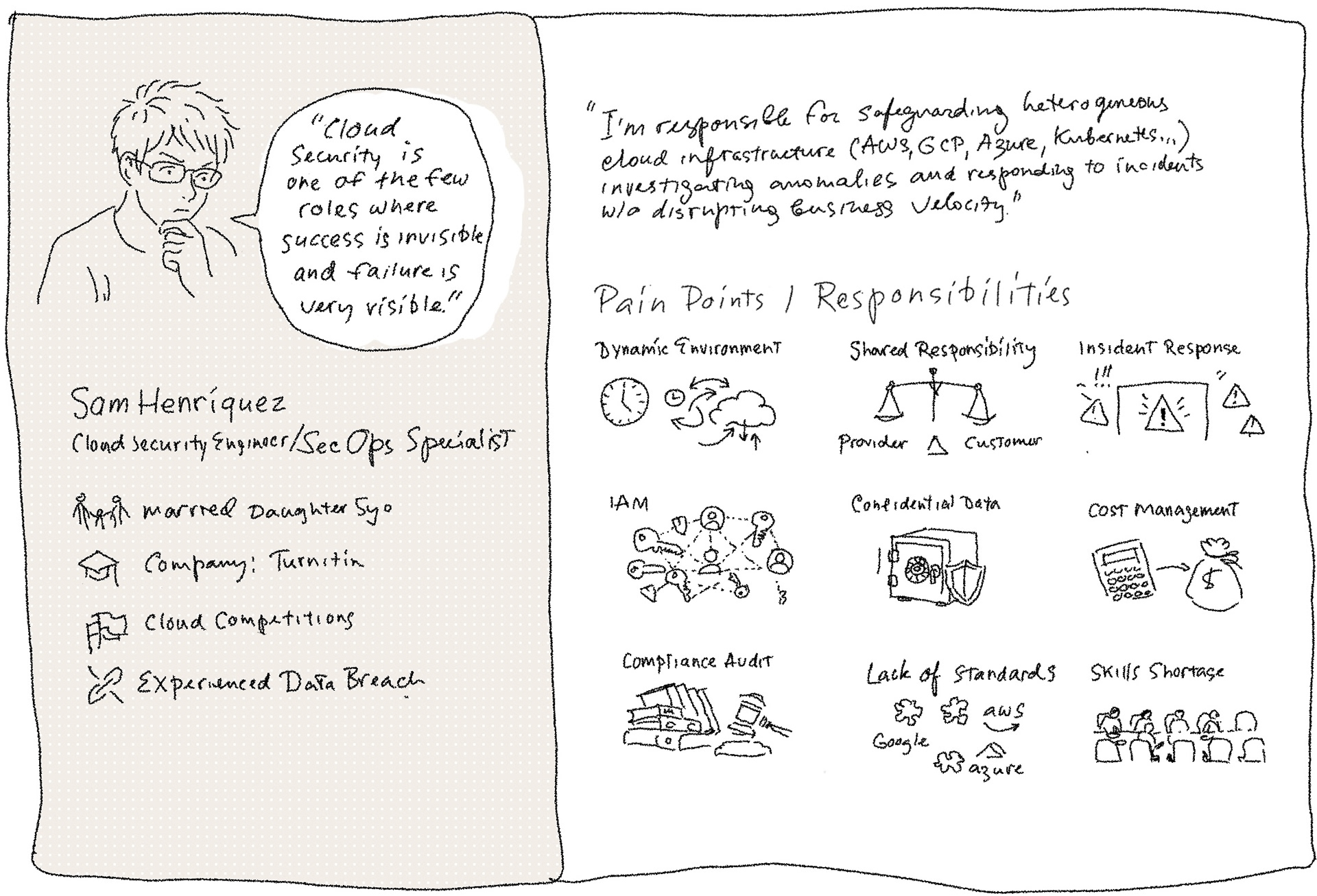
Cloud Security Engineers work under a lot of pressure, buried under thousands of alerts and wary of "black box" automation.
Confluera was an A-series Cloud Detection and Response startup where engineers developed an algorithm capable of tracing attack paths accurately and in real-time across multiple cloud environments. However, our prospects weren't converting.
As Lead Product Designer at a startup, I understood our technology and when I had the time, I focused on the marketing to redefine our product storytelling and redesign the prospect conversion experience.
Key Research Insights
Through qualitative interviews with practicing Cloud Security Engineers and review of recorded sales discovery calls, two friction points came up:
"Ready to Quit" (Cognitive Overload & Alert Fatigue):
- Engineers were triaging hundreds to thousands of alerts daily across disparate point tools (CSPM, SIEM, CWPP).
- Context switching and manual log stitching caused chronic burnout; missing a true critical incident amid noise was an existential fear.
- Engineers were triaging hundreds to thousands of alerts daily across disparate point tools (CSPM, SIEM, CWPP).
- Context switching and manual log stitching caused chronic burnout; missing a true critical incident amid noise was an existential fear.
Implication: They do not want another alert dashboard. They need correlated context that eliminates investigative toil.
"Garbage In, Garbage Out" (Deep Skepticism of Automation):
- The persona holds deep cynicism toward vendor claims of "AI magic" and automated remediation.
- Past experience with opaque heuristic models had led to false positives or broken production workloads.
- Engineers stated they would only welcome automated investigation if they could see the underlying telemetry, trace the logic, and verify the signals.
- The persona holds deep cynicism toward vendor claims of "AI magic" and automated remediation.
- Past experience with opaque heuristic models had led to false positives or broken production workloads.
- Engineers stated they would only welcome automated investigation if they could see the underlying telemetry, trace the logic, and verify the signals.
Implication: Transparency builds trust. Detections had to map visibly to established standards (e.g., MITRE ATT&CK) and raw telemetry.
EVALUATION
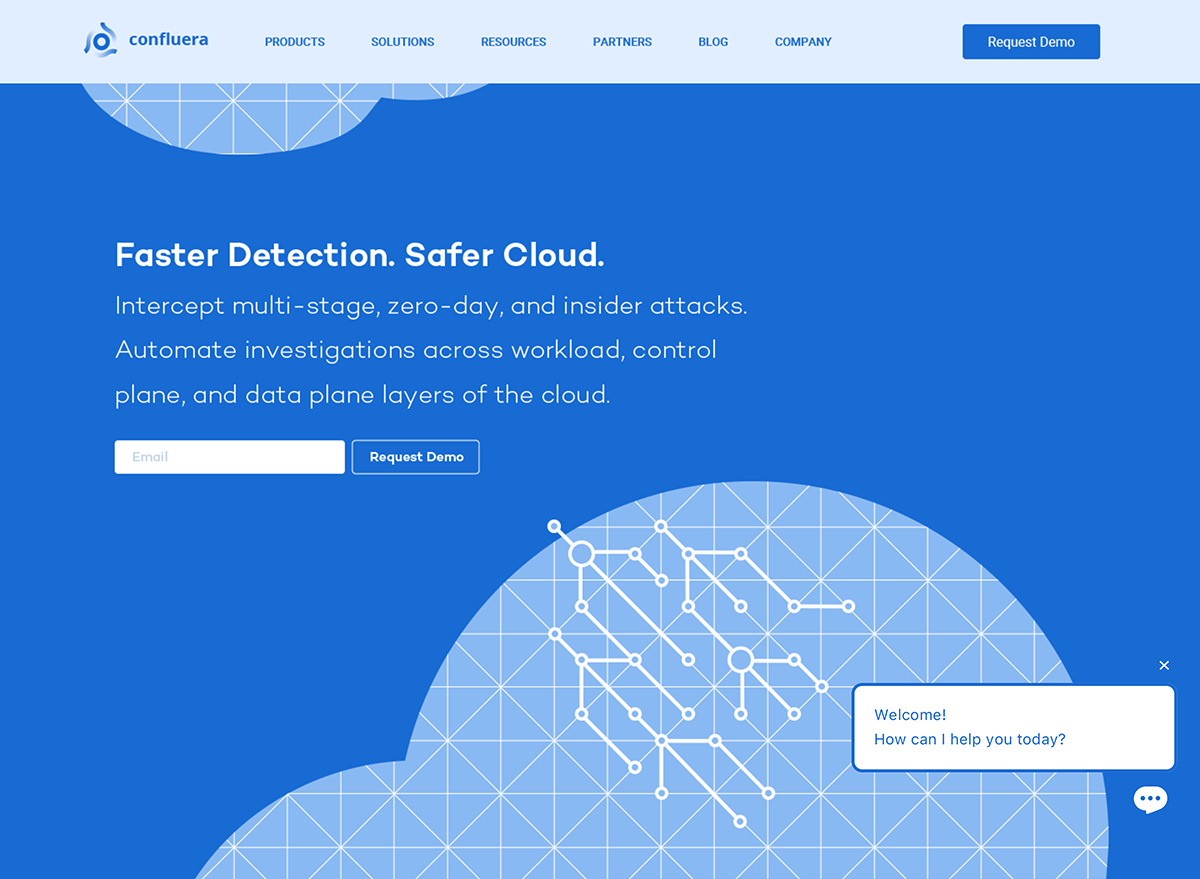
Less than 10% of Confluera website visits lasted more than a minute.
Our Cloud Security scientists and engineers developed a powerful new algorithm that tracked and investigated possible threats across hundreds of millions of events across Google, AWS and Azure clouds in real time. Our technology was the best in the industry. Our prospects were turned off by the weak story.
Content Relevance:
– Is the content relevant to the target audience's needs and interests?
– Are the website sections/ pages driving engagement?
– How do design and content impact conversion rates?
Call to Action:
– How prominently are CTAs displayed on the website?
– Are they compelling and aligned with user intent/motivation?
Usability:
– Is website easy to navigate, w/clear menus & intuitive user paths?
– Are forms + checkout processes streamlined & user-friendly?
– Is the content relevant to the target audience's needs and interests?
– Are the website sections/ pages driving engagement?
– How do design and content impact conversion rates?
Call to Action:
– How prominently are CTAs displayed on the website?
– Are they compelling and aligned with user intent/motivation?
Usability:
– Is website easy to navigate, w/clear menus & intuitive user paths?
– Are forms + checkout processes streamlined & user-friendly?
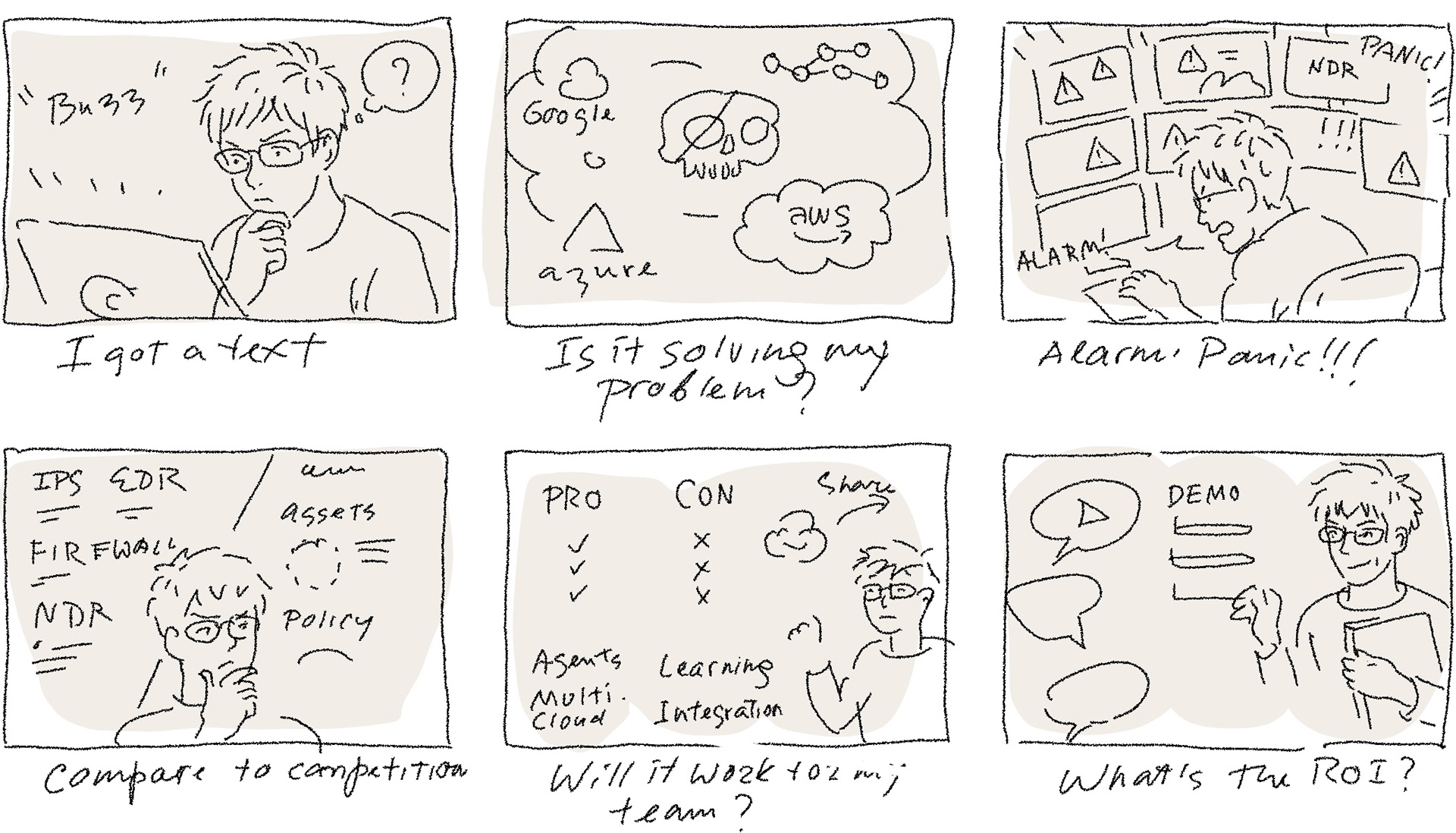
Cloud Detection and Response Engineer JTBD
MOOD BOARD / BRAND
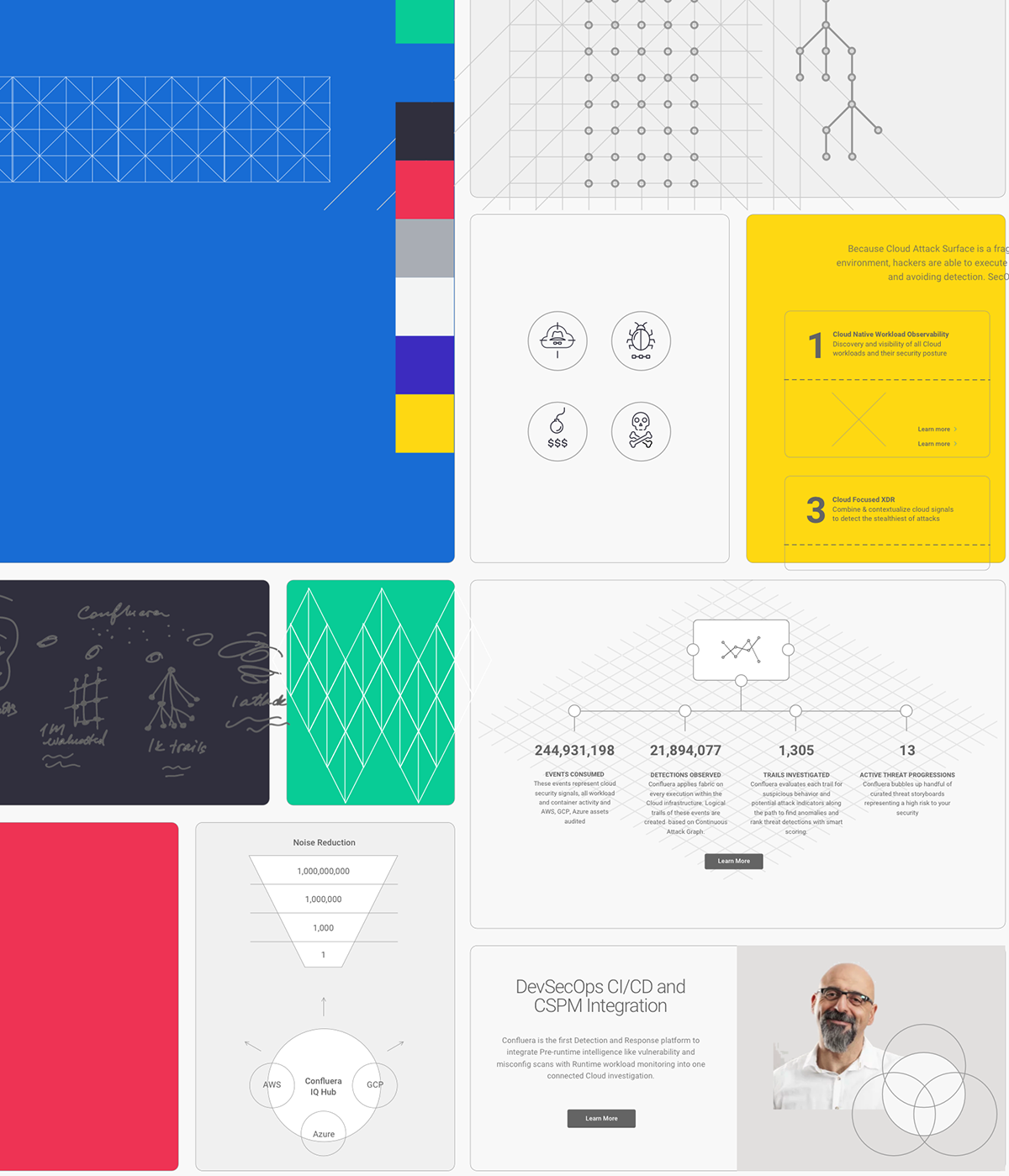
A deep tech brand mood board needs to bridge the gap between complex, heavy engineering (like cybersecurity or precision medicine) and highly polished, functional human interfaces. The goal is to convey complex systems made elegant and intuitive, moving away from clichéd "hacker text" or generic corporate tech styles toward something cinematic, precise, and authoritative.
Here is a comprehensive visual and conceptual blueprint for your brand mood board, tailored to resonate with high-growth technical startups and technical stakeholders.
The Design Challenges
Narrative & Visual Storytelling:
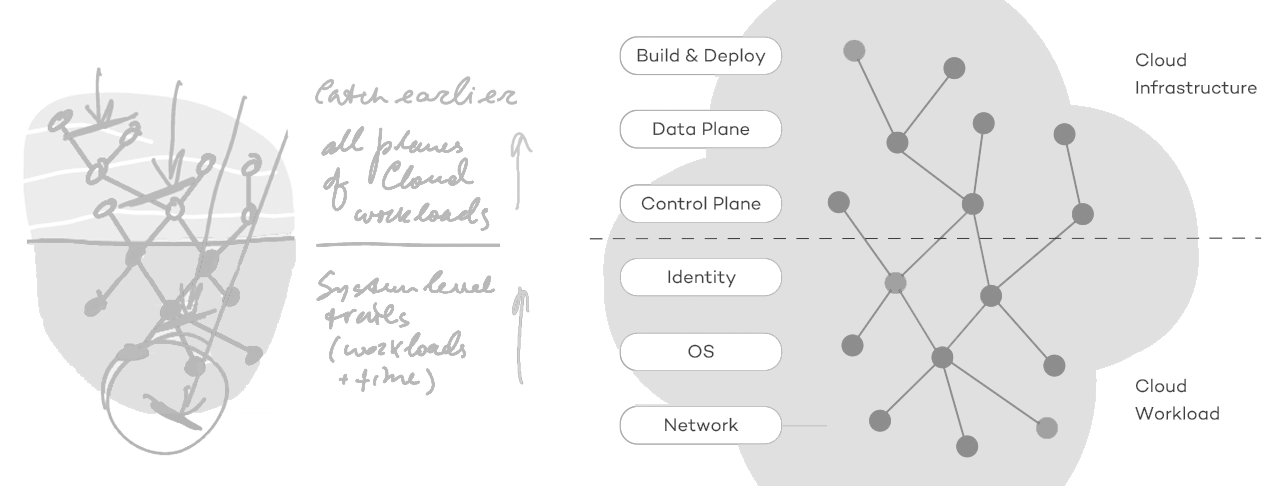
Translate real-time anomaly stitching, continuous attack graph tracking, and broad multi-cloud integrations into an intuitive mental model that convinces skeptical engineers to request a technical POC.
Translate real-time anomaly stitching, continuous attack graph tracking, and broad multi-cloud integrations into an intuitive mental model that convinces skeptical engineers to request a technical POC.
Web Experience & Conversion Flow:
Redesign the website to replace passive text heavy marketing with progressive, hands-on technical disclosure, smoothing the path from first visit to demo/sandbox engagement.
Redesign the website to replace passive text heavy marketing with progressive, hands-on technical disclosure, smoothing the path from first visit to demo/sandbox engagement.

STRATEGY & The "Aha Moment"
Defining the "Aha Moment"
An engineer’s breakthrough moment with Confluera needed to be experiential:
An engineer’s breakthrough moment with Confluera needed to be experiential:
"This doesn't just alert on an isolated anomaly—it connects the dots across my runtime, containers, and cloud control plane into a single, cohesive narrative so I don't have to stitch logs for six hours."
Strategic Pillars
Show the Mechanics, Don’t Claim the Magic: Replace abstract claims ("next-gen AI") with direct visual demonstrations of causality and attack progression.
Show the Mechanics, Don’t Claim the Magic: Replace abstract claims ("next-gen AI") with direct visual demonstrations of causality and attack progression.
Engineer-to-Engineer Voice: Ground copy in operational realities—CLI commands, runtime telemetry, MITRE ATT&CK stages, and exact integration points.
Progressive Verification: Allow engineers to inspect the mechanics before asking for their contact information.
Execution
A. Developing the "Attack Storyboard" Visual Narrative
To explain how Confluera intercepts threats in real time:
To explain how Confluera intercepts threats in real time:
Attack Progression Framework: Designed an interactive visual mental model demonstrating how isolated signals (e.g., unusual IAM assume-role, privilege escalation in a container, unauthorized egress) combine into a single, active cyberattack chain.
Deterministic vs. Heuristic Demonstration: Illustrated side-by-side comparisons showing traditional SIEM alert storms versus Confluera’s unified storyboard, visibly showing the 90%+ reduction in triage time.
Integration Topology: Built an ecosystem map showing non-invasive agent and agentless deployment across Kubernetes clusters, cloud APIs (AWS/Azure/GCP), and existing workflows (Slack, PagerDuty, Jira, SIEMs).
B. Website Redesign & Conversion Architecture
Above the Fold (Direct Value & Context):
- Replaced abstract 3D graphics with an animated, high-fidelity UI snippet of an active attack path being resolved in real time.
- Headline and subhead directly acknowledged the pain point: solving alert fatigue through verifiable, real-time threat stitchings.
- Replaced abstract 3D graphics with an animated, high-fidelity UI snippet of an active attack path being resolved in real time.
- Headline and subhead directly acknowledged the pain point: solving alert fatigue through verifiable, real-time threat stitchings.
Interactive Sandbox & Guided Scenarios:
- Designed an embeddable, interactive scenario viewer on the site. Prospects could select real-world scenarios (e.g., Cryptomining via Container Escape or S3 Exfiltration via Compromised Access Key) and click through the attack sequence step-by-step.
- Designed an embeddable, interactive scenario viewer on the site. Prospects could select real-world scenarios (e.g., Cryptomining via Container Escape or S3 Exfiltration via Compromised Access Key) and click through the attack sequence step-by-step.
Dedicated section detailing data capture methods, kernel-level telemetry, zero impact on workload performance, and enterprise compliance standards.
Streamlined Conversion Flow:
- Reduced form friction from eight fields down to work email, company name, and primary cloud environment.
- Introduced contextual call-to-actions: technical engineers could choose between "Schedule Live Technical Demo" or "View Interactive Tour", while ecosystem partners had dedicated paths for technology alliance inquiries.
- Reduced form friction from eight fields down to work email, company name, and primary cloud environment.
- Introduced contextual call-to-actions: technical engineers could choose between "Schedule Live Technical Demo" or "View Interactive Tour", while ecosystem partners had dedicated paths for technology alliance inquiries.
Results & Business Impact
+65% Qualified Conversion Rate: Significant increase in website visitors scheduling deep-dive technical demos and starting proof-of-concept (POC) evaluations.
Partner Acquisition: Successfully onboarded new cloud marketplace and managed detection and response (MDR/MSSP) partners who cited the site's clarity regarding integrations and deployment.
Qualitative Feedback from Sales & Prospects:
Account executives reported prospects referencing specific visual storyboards during initial calls ("I saw the Kubernetes container escape walk-through on your site—that's the exact issue we faced last month").
Reduced average discovery call time spent explaining architectural fundamentals, shifting discussions straight to pilot scoping.

Recipe for Success
1. Startup Product team is well positioned to formulate Marketing
To explain Confluera to our prospects & improve conversion we put new product features on hold so that our small Product team may focus on the messaging. The new website helped to attract large cyber security companies who wanted to partner with our startup.
To explain Confluera to our prospects & improve conversion we put new product features on hold so that our small Product team may focus on the messaging. The new website helped to attract large cyber security companies who wanted to partner with our startup.
2. Understand the problem first
To understand how our technology is different and better, we conducted competitive research and looked closely at other cloud security solutions in the market.
To understand how our technology is different and better, we conducted competitive research and looked closely at other cloud security solutions in the market.
3. Don’t oversimplify.
The target audience was technical and strategic. Technology partners are interested in understanding how our unique algorithm works. Make the story quick and easy to read, but don’t lose critical details that the audience needs to evaluate our cyber security tech when comparing it to others.
We needed to explain how Confluera is able to find the needle in the haystack by looking through hundreds of millions of weak signals to find a potential threat.
The target audience was technical and strategic. Technology partners are interested in understanding how our unique algorithm works. Make the story quick and easy to read, but don’t lose critical details that the audience needs to evaluate our cyber security tech when comparing it to others.
We needed to explain how Confluera is able to find the needle in the haystack by looking through hundreds of millions of weak signals to find a potential threat.
3. Design partner is critical
In a competitive space differentiation and feature fit is not enough. Having customers who champion our technology and help to tell our story was critical to our success.
In a competitive space differentiation and feature fit is not enough. Having customers who champion our technology and help to tell our story was critical to our success.